49 Fate Readers, One Big Question: Is Any of This Real?
Disney+'s Battle of Fates (운명전쟁 49) has taken the world by storm. The Korean survival show pits 49 "fate readers" — shamans, Saju masters, tarot readers, and face readers — against each other in a high-stakes competition to prove who can most accurately read a person's destiny. It's dramatic, intense, and wildly entertaining television.
But if you're watching from outside Korea, you're probably asking the question that millions of viewers have asked: Is any of this real? How does Korean fortune-telling actually work?
The short answer: the show mixes several very different traditions into one dramatic format. Understanding what each tradition actually is — and what the show gets right and wrong — is the key to appreciating both the entertainment and the genuine cultural depth behind it.
What Is Korean Saju, Really?
Saju (사주) is Korea's most widely practiced system of destiny analysis. The name literally means "Four Pillars" — and the full term, Saju Palja (사주팔자), means "Four Pillars, Eight Characters." Think of it as your cosmic DNA: a unique code generated from the exact year, month, day, and hour of your birth.
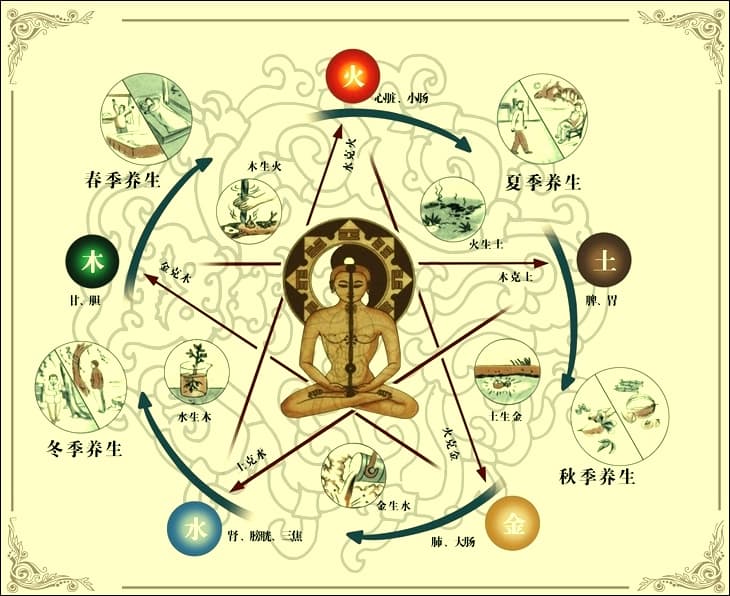
Unlike Western astrology (which maps the stars) or shamanism (which channels spiritual entities), Saju is a structured, pattern-based analytical system. It uses the ancient framework of Yin-Yang and the Five Elements (Wood, Fire, Earth, Metal, Water) to decode your personality, strengths, vulnerabilities, career tendencies, relationship patterns, and the timing of major life phases.
Koreans often say "팔자야..." (roughly, "it's my fate...") when something inevitable happens. This expression comes directly from the Saju tradition — the idea that your eight characters at birth set the fundamental pattern of your life story.
The Four Pillars, Explained Simply
Each pillar consists of two characters — a Heavenly Stem and an Earthly Branch — creating your eight-character birth chart. Here's what each pillar reveals:
- Year Pillar: Your ancestral energy and social persona — how the world sees you. This is where your zodiac animal (Rat, Ox, Tiger, etc.) comes from.
- Month Pillar: Your career tendencies and the influence of parents and upbringing.
- Day Pillar: Your core self — the most important pillar. The Heavenly Stem of your day is your "Day Master," the central reference point for your entire reading.
- Hour Pillar: Your children, later years, and hidden inner aspirations.
Saju vs Shamanism vs Tarot: What Battle of Fates Mixes Together
One of the most confusing things about Battle of Fates for international viewers is that the show groups very different traditions under one umbrella of "fate reading." In reality, these are distinct practices with different worldviews:
Saju (Four Pillars Analysis)
Method: Mathematical calculation based on birth date and time.
Worldview: Time carries inherent elemental qualities; your birth moment captures a unique energy pattern.
What it does: Analyzes personality, life patterns, career aptitude, relationship dynamics, and fortune timing through structured elemental interpretation.
Analogy: Think of it as a sophisticated personality + life-path analysis system — more like data analytics than mysticism.
Shamanism (Muism / 무속)
Method: Spiritual channeling, rituals, and ceremonies (굿, Gut).
Worldview: The spirit world is real and active; shamans serve as bridges between human and spiritual realms.
What it does: Communicates with ancestral spirits, diagnoses spiritual causes of problems, performs healing rituals.
Analogy: Closer to a spiritual medium or healer than an analyst.
Tarot
Method: Card drawing and symbolic interpretation.
Worldview: Symbolic archetypes reflect unconscious patterns and potential futures.
What it does: Provides guidance on specific questions or situations through card symbolism.
Analogy: A conversation with your subconscious through symbolic imagery.
Face Reading (관상)
Method: Analysis of facial features and body proportions.
Worldview: Physical features reflect inner character and destiny patterns.
What it does: Reads personality traits, fortune indicators, and life trajectory from facial structure.
Analogy: Similar to physiognomy traditions found across many cultures.
What Battle of Fates Gets Wrong (and Right)
What the Show Gets Wrong
Battle of Fates is brilliant television, but it shapes Korean fortune-telling to fit a competition format — and that changes the picture significantly:
- The "hit or miss" framing: The show treats fate reading like a guessing game — "Can you guess this person's job/relationship/secret?" Real Saju doesn't work that way. It reads patterns and tendencies over a lifetime, not specific factual details. A genuine Saju reading would say "You have strong leadership energy and likely gravitate toward roles with authority" rather than "You are a police officer."
- The dramatic reveals: TV needs tension and surprise. Real Saju consultations are more like coaching sessions — thoughtful, nuanced conversations about life patterns, not dramatic "gotcha" moments.
- Mixing all traditions equally: By pitting shamans against Saju masters against tarot readers, the show implies they're all doing the same thing. They're not — and each tradition would acknowledge that their methods and goals are different.
What the Show Gets Right
Despite the entertainment framing, Battle of Fates has done something remarkable:
- Global visibility: Korean fortune-telling traditions have been practiced for centuries but were virtually unknown outside Korea. The show has sparked genuine international curiosity about Saju, Korean shamanism, and Eastern approaches to understanding destiny.
- Cultural depth: The show reveals how deeply fortune-telling is woven into Korean culture — it's not a fringe practice but a mainstream part of Korean life, consulted for weddings, baby naming, career decisions, and major life choices.
- Practitioner diversity: By featuring 49 different readers, the show demonstrates the wide variety of approaches within Korean fortune-telling, from highly analytical Saju masters to deeply spiritual shamans.
How a Real Korean Saju Reading Actually Works
If you're intrigued by what you've seen on Battle of Fates and want to experience a real Saju reading, here's what the actual process looks like:
Step 1: Your Birth Information
You provide your birth year, month, day, and hour. That's it — no birth location needed (unlike Western astrology). From this information, your Four Pillars and Eight Characters are calculated using the traditional Sexagenary Cycle (60 Gapja).
Step 2: Elemental Analysis
Your chart is analyzed for the balance of the Five Elements — Wood, Fire, Earth, Metal, and Water. Each element represents different qualities: Wood is growth and creativity, Fire is passion and charisma, Earth is stability, Metal is discipline, and Water is wisdom and adaptability.
The balance (or imbalance) of these elements reveals your natural strengths and areas for growth. For example, a "Fire Day Master with strong Wood and weak Metal" might indicate someone who is creative, expressive, and passionate, but who benefits from developing more structure and discipline in their life.
Step 3: Ten Gods (Relationship Dynamics)
The Ten Gods (십성, Sipseong) system analyzes how each element in your chart relates to your Day Master, revealing patterns in your relationships, career, wealth potential, and personal challenges. These "gods" aren't deities — they're relational energies that describe how different forces in your life support or challenge you.
Step 4: Life Timing (Daeun Cycles)
Perhaps the most powerful part of a Saju reading is the Daeun (대운) analysis — 10-year luck cycles that show how the elemental environment shifts throughout your life. This explains why certain decades feel dramatically different: your 20s might have been a period of expansion while your 30s felt like a time of consolidation, depending on which elements are active in each cycle.
Step 5: Practical Guidance
A good Saju reading doesn't just describe your chart — it provides actionable guidance. When are the best periods for career moves? What kind of partner complements your elemental composition? What health areas should you pay attention to? This practical orientation is what makes Saju a living, useful tradition rather than just an intellectual curiosity.
Why Korean Saju Is Having a Global Moment
Battle of Fates is just the tip of the iceberg. Korean Saju is experiencing a surge of international interest for several reasons:
- The Korean Wave: As K-dramas, K-pop, and Korean cuisine have gone global, so has curiosity about Korean cultural traditions like Saju.
- AI-powered accessibility: Modern AI technology has made it possible to get a detailed Saju reading in English, Chinese, Japanese, and other languages — breaking the language barrier that previously limited Saju to Korean speakers.
- Complementary to Western astrology: Many people who already follow their Western horoscope find that Saju offers a completely different (and complementary) perspective on their personality and life path.
- Practical and specific: Saju's structured approach to life timing and compatibility analysis appeals to people looking for actionable insights, not just personality descriptions.
From Battle of Fates to Your Own Chart
If watching Battle of Fates sparked your curiosity about Korean fortune-telling, the best next step is to experience a real Saju reading yourself. Unlike the dramatic competition format of the show, an actual reading is a personal, reflective experience that reveals patterns you may have felt intuitively but never had the framework to understand.
Modern AI-powered Saju analysis makes this accessible to anyone, anywhere in the world. You don't need to fly to Seoul or speak Korean — just enter your birth date and time, and the ancient wisdom of the Four Pillars is decoded for you in your own language.
Get Your Free Saju Reading
Discover what Korean Saju reveals about your destiny. Our AI-powered analysis calculates your Four Pillars, Five Elements balance, and life timing cycles — the real fortune-telling behind Battle of Fates.
Try Your Free Saju Analysis Now