A Shared Ancient Heritage
Chinese BaZi (八字) and Korean Saju (사주) are siblings born from the same intellectual tradition. Both systems use the Four Pillars of Destiny — year, month, day, and hour — encoded through Heavenly Stems and Earthly Branches. Both draw on Yin-Yang theory and the Five Elements. Yet over centuries of independent development, Korean Saju has evolved distinctive characteristics that set it apart from its Chinese cousin.
Understanding the differences between these two traditions illuminates how the same foundational concepts can be interpreted in culturally specific ways — much like how Italian and French cuisine share Mediterranean roots but have developed into distinctly different culinary traditions.
Historical Development
Chinese BaZi: The Original System
BaZi's foundations were laid during China's Tang Dynasty (618-907 CE) and refined during the Song Dynasty (960-1279 CE). The system was formalized by scholars like Xu Ziping, whose approach — using the Day Master as the central reference point — became the standard method still practiced today. Chinese BaZi has continued to evolve within mainland China, Taiwan, Hong Kong, and Southeast Asian Chinese communities.
Korean Saju: The Korean Evolution
Four Pillars philosophy entered Korea during the Goryeo Dynasty (918-1392 CE) and became deeply embedded in Korean culture during the Joseon Dynasty (1392-1897 CE). Korean scholars adapted the system to local cultural values, integrating it with Korean shamanic traditions, Confucian social structures, and indigenous folk beliefs. Over time, Korean Saju developed its own interpretive schools, terminology, and cultural applications that distinguish it from Chinese BaZi.
Key Differences
1. Interpretive Emphasis
Chinese BaZi tends to emphasize wealth, power, and social status in its interpretations. Historically, BaZi readings were often sought by scholars preparing for imperial examinations or merchants seeking business success. The system's language reflects this — terms like "Commanding Star" and "Treasury" point to career achievement and financial accumulation.
Korean Saju, while covering the same life domains, places greater emphasis on relational harmony, family dynamics, and emotional well-being. Korean culture's deep Confucian roots mean that Saju readings frequently focus on filial piety, marital compatibility, and the individual's role within family and community structures.
2. Sinsal (Special Stars)
Korean Saju has developed an extensive system of Sinsal (신살) — special symbolic stars that provide additional layers of interpretation beyond the basic elemental analysis. While Chinese BaZi also uses symbolic stars, Korean practitioners have expanded and adapted this system significantly. Stars like the Peach Blossom Star (도화살, indicating romantic charisma), the Noble Person Star (귀인, indicating helpful connections), and the Traveling Horse Star (역마살, indicating movement and change) play a prominent role in Korean readings.
3. Cultural Applications
In Korea, Saju is deeply integrated into major life decisions in ways that sometimes surprise Westerners. Korean wedding planning almost always involves a Saju consultation to determine the most auspicious date. Baby naming often considers the child's Saju chart to select a name that balances their elemental composition. Even corporate executives have been known to consult Saju readers before major business decisions.
Chinese BaZi serves similar functions but with different cultural nuances. In Chinese tradition, Feng Shui (geomancy) and BaZi are often used together — your birth chart informs the ideal spatial arrangement of your home and office. This Feng Shui integration is less prominent in Korean Saju practice.
Technical Differences
Calendar Calculation
Both systems use the solar terms (절기, Jeolgi) to determine month boundaries rather than the lunar calendar months that most people associate with "Chinese calendar." However, Korean Saju practitioners sometimes also reference the lunar calendar for certain calculations, particularly when dealing with the boundary between years (which starts at the solar term Ipchun, not January 1 or Lunar New Year).
The Yajasi Rule
Korean Saju has a unique rule called Yajasi (야자시) that affects how births between 11:30 PM and 12:30 AM are handled. During this liminal period between days, Korean practitioners may use the current day's stem for date calculations while using the next day's branch for the hour pillar. This nuanced handling of midnight births is a distinctly Korean contribution not found in standard Chinese BaZi.
Daeun Calculation
While both systems use 10-year luck cycles (大運 in Chinese, 대운 in Korean), the exact method of calculating when each cycle begins can differ slightly between Chinese and Korean schools. Korean practitioners may use a different counting method for determining the starting age of the first Daeun, leading to slight variations in fortune timing predictions.
The Chinese Zodiac Connection
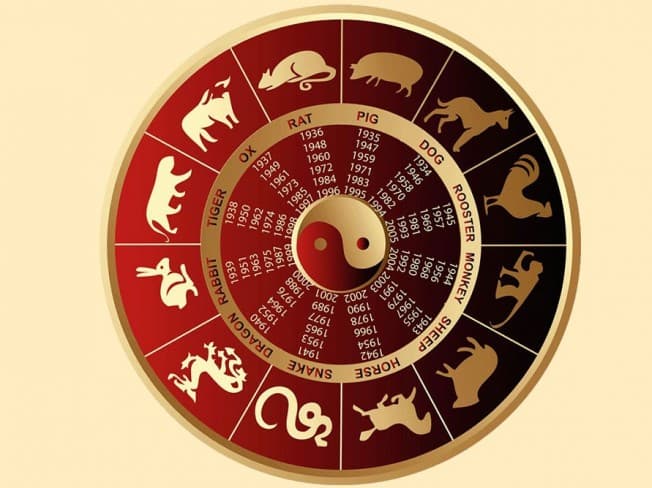
Most Westerners encounter Chinese astrology through the 12 zodiac animals — Rat, Ox, Tiger, Rabbit, Dragon, Snake, Horse, Goat, Monkey, Rooster, Dog, and Pig. These animals correspond to the 12 Earthly Branches used in both BaZi and Saju. However, both traditions would agree that knowing just your zodiac animal (birth year) is only scratching the surface. It's like knowing only your sun sign in Western astrology — useful as a conversation starter, but far too simplistic for meaningful analysis.
A full Saju or BaZi reading considers all four pillars, the interactions between their elements, the strength of the Day Master, and the progression of luck cycles over time. The zodiac animal is just one small piece of a much larger puzzle.
Which Tradition to Explore?
If you're drawn to East Asian astrology, both Chinese BaZi and Korean Saju offer profound insights. Chinese BaZi has a larger global practitioner base and more English-language resources. Korean Saju, while less internationally known, offers a unique cultural perspective and has recently become more accessible through AI-powered analysis tools.
For those new to Eastern astrology, Korean Saju provides an excellent entry point — its emphasis on personal relationships, emotional patterns, and practical life guidance resonates well with modern seekers looking for actionable wisdom rather than abstract philosophical concepts.
Try Korean Saju Analysis
Experience the unique perspective of Korean Saju for yourself. Our AI-powered tool provides a detailed Four Pillars reading in English.
Get Your Free Saju Reading