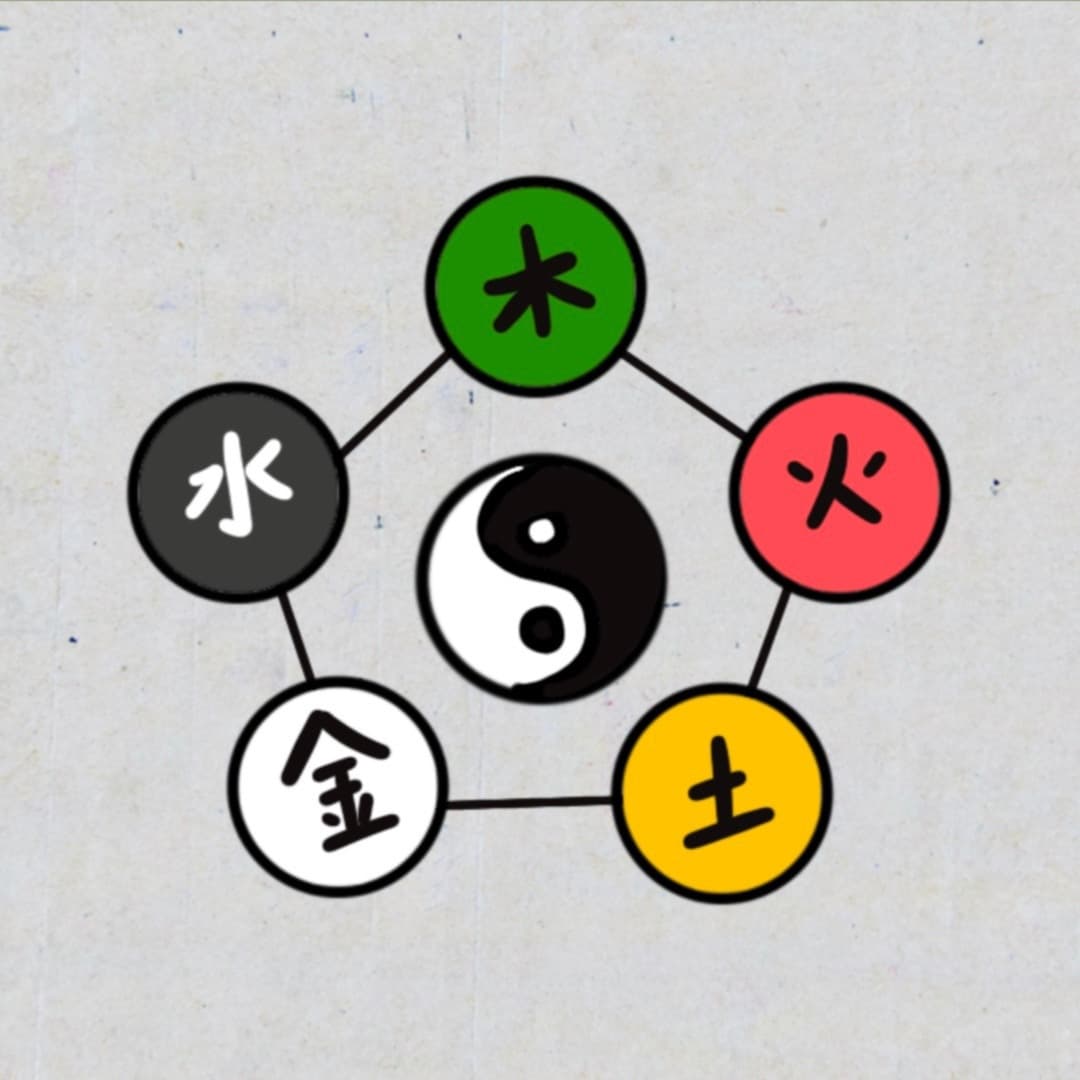
The Foundation of Eastern Philosophy
If Western astrology is built on the four classical elements (Fire, Earth, Air, Water), Eastern astrology rests on a more complex system of five: Wood (木), Fire (火), Earth (土), Metal (金), and Water (水). Known as Ohaeng (오행) in Korean or Wu Xing (五行) in Chinese, these Five Elements are not just static categories — they are dynamic forces that interact, support, and restrain each other in an endless cycle of transformation.
Understanding the Five Elements is the key to unlocking Korean Saju and Chinese astrology. Your birth chart is essentially a map of these elemental forces at the moment you were born, and your life unfolds according to how they balance, clash, and evolve over time.
The Five Elements in Detail
Wood (木) — Growth and Vision
Wood represents growth, expansion, and upward movement — like a tree pushing toward the sky. In personality, Wood energy manifests as ambition, creativity, idealism, and a drive to grow and improve. Wood people are often natural planners and visionaries who can see the big picture.
- Season: Spring
- Direction: East
- Color: Green/Blue
- Personality traits: Creative, ambitious, compassionate, flexible
- Health associations: Liver, eyes, tendons
- Yang Wood (갑, Gap): Like a tall tree — strong, upright, unbending, leadership-oriented
- Yin Wood (을, Eul): Like a vine or flower — adaptable, graceful, diplomatic, artistic
Fire (火) — Passion and Transformation
Fire represents warmth, illumination, and transformation. It is the most Yang of all elements — explosive, outward, and visible. Fire people are often charismatic, enthusiastic, and expressive. They light up rooms and inspire others, but can also burn out or become consumed by their own intensity.
- Season: Summer
- Direction: South
- Color: Red
- Personality traits: Passionate, charismatic, energetic, inspiring
- Health associations: Heart, small intestine, blood circulation
- Yang Fire (병, Byeong): Like the Sun — radiant, generous, attention-commanding, proud
- Yin Fire (정, Jeong): Like a candle — warm, intimate, focused, romantic
Earth (土) — Stability and Nurturing
Earth represents stability, centeredness, and nourishment. It is the balancing force among the five elements, providing the ground on which all others stand. Earth people are typically reliable, patient, and nurturing — the ones others turn to for stability and support.
- Season: Late summer / transitional periods
- Direction: Center
- Color: Yellow/Brown
- Personality traits: Stable, reliable, nurturing, practical
- Health associations: Stomach, spleen, muscles
- Yang Earth (무, Mu): Like a mountain — immovable, protective, solid, authoritative
- Yin Earth (기, Gi): Like fertile soil — nurturing, adaptable, supportive, productive
Metal (金) — Precision and Justice
Metal represents refinement, precision, and determination. It is the element of structure, order, and justice. Metal people tend to be disciplined, principled, and detail-oriented. They value fairness and have a strong sense of right and wrong.
- Season: Autumn
- Direction: West
- Color: White/Gold
- Personality traits: Disciplined, principled, determined, organized
- Health associations: Lungs, large intestine, skin
- Yang Metal (경, Gyeong): Like a sword — sharp, decisive, competitive, courageous
- Yin Metal (신, Sin): Like a jewel — refined, elegant, meticulous, sensitive
Water (水) — Wisdom and Flow
Water represents wisdom, depth, and adaptability. It flows around obstacles rather than confronting them directly. Water people are often introspective, intelligent, and emotionally perceptive. They excel in roles requiring deep thinking, empathy, and strategic patience.
- Season: Winter
- Direction: North
- Color: Black/Dark Blue
- Personality traits: Wise, adaptable, intuitive, resourceful
- Health associations: Kidneys, bladder, bones
- Yang Water (임, Im): Like the ocean — vast, powerful, deep, adventurous
- Yin Water (계, Gye): Like rain or dew — gentle, nourishing, perceptive, sensitive
The Generating Cycle (상생, Sangsaeng)
The Five Elements support each other in a creative cycle, where each element naturally gives rise to the next:
- Wood feeds Fire — wood serves as fuel for flames
- Fire creates Earth — ashes and lava become soil
- Earth yields Metal — minerals are mined from the earth
- Metal collects Water — metal surfaces condense moisture
- Water nourishes Wood — rain helps trees grow
In your Saju chart, generating relationships between elements indicate natural support and flow. If your Day Master is Wood and you have strong Water elements in your chart, you have built-in support — the Water nourishes your core identity.
The Controlling Cycle (상극, Sanggkeuk)
The Five Elements also restrain each other in a controlling cycle that prevents any single element from becoming too dominant:
- Wood breaks Earth — roots split soil
- Earth dams Water — levees contain floods
- Water extinguishes Fire — rain puts out flames
- Fire melts Metal — forge heat reshapes iron
- Metal cuts Wood — axes fell trees
Controlling relationships in your chart can indicate challenges, but they're not necessarily negative. Some control is essential for balance — without it, one element would dominate and create problems. The key is whether the controlling force is proportionate or overwhelming.
Elemental Balance in Your Chart
A well-balanced Saju chart contains a healthy mix of all five elements. In practice, perfect balance is rare — most people have dominant and weak elements. Understanding your elemental composition reveals:
- Dominant elements: Your natural strengths and tendencies
- Weak or missing elements: Areas requiring conscious development
- Conflicting elements: Internal tensions and growth opportunities
- Supporting elements: Resources and allies in your life path
For example, someone with abundant Fire but little Water might be extraordinarily passionate and charismatic but struggle with patience, emotional regulation, or long-term planning. Understanding this imbalance isn't about changing who you are — it's about awareness that helps you navigate your strengths and vulnerabilities more skillfully.
The Five Elements in Daily Life
In traditional Korean and Chinese culture, the Five Elements influence far more than astrology. They are applied to:
- Traditional Medicine: Each element corresponds to specific organs, and elemental imbalance is considered a source of illness
- Feng Shui: The arrangement of living spaces is designed to balance elemental energies
- Naming: Korean parents often choose baby names that supply missing elements from the child's Saju chart
- Food: Each element corresponds to flavors (Wood: sour, Fire: bitter, Earth: sweet, Metal: spicy, Water: salty)
- Colors: Wearing colors associated with beneficial elements is believed to attract positive energy
Five Elements vs Four Elements
Western astrology uses four elements (Fire, Earth, Air, Water), while Eastern astrology uses five (Wood, Fire, Earth, Metal, Water). The most notable difference is the inclusion of Metal and Wood in the Eastern system and Air in the Western system.
The Eastern system's Five Elements also interact in more complex ways — through both generating and controlling cycles — whereas Western elements are typically described in terms of compatibility (Fire and Air are compatible, Earth and Water are compatible) without the same dynamic interplay.
This added complexity gives Eastern astrology a richer vocabulary for describing how different aspects of your personality interact with each other and with the world around you.
Discover Your Elemental Balance
Curious about which elements dominate your birth chart? Try our free Saju analysis and learn how Wood, Fire, Earth, Metal, and Water shape your destiny.
Get Your Free Saju Reading