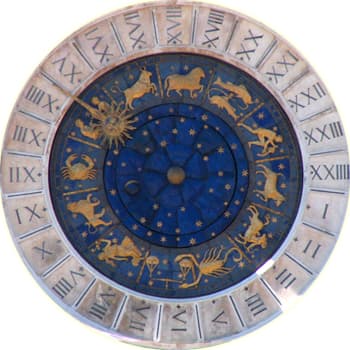
The Universal Human Quest
Across every civilization in human history, people have looked for patterns that connect their lives to something larger — the stars, the seasons, the flow of time. This universal impulse gave rise to astrological traditions on every continent. Today, the two most widely practiced traditions are Western astrology (rooted in Greco-Roman thought) and Eastern astrology (rooted in Chinese philosophy), each offering a distinct framework for understanding human destiny.
Origins and History
Western Astrology
Western astrology traces its origins to ancient Mesopotamia (around 2000 BCE), where Babylonian priests observed celestial patterns and connected them to earthly events. The Greeks refined this tradition, developing the 12-sign zodiac and the concept of natal charts. Through Rome, the Islamic Golden Age, and the European Renaissance, Western astrology evolved into the system we know today — one centered on the movements of planets through zodiac constellations.
Eastern Astrology
Eastern astrological traditions emerged independently in China around 2700 BCE, rooted in the observation of natural cycles and the development of Yin-Yang and Five Elements theory. Rather than tracking planetary positions, Chinese astrology focused on the cyclical nature of time itself. This tradition spread throughout East Asia — to Korea (as Saju), Japan (as Shichū Suimei), and Vietnam — each culture adapting the core principles to their own philosophical and social frameworks.
Fundamental Differences
1. What They Observe
Western: The positions of the Sun, Moon, and planets against the backdrop of 12 zodiac constellations. The sky is the primary reference — astrologers create a map of the heavens at the exact moment and location of birth.
Eastern: The quality of time itself, expressed through cyclical patterns of elemental energy. There are no astronomical observations involved — the system is purely calendrical, based on the interplay of Heavenly Stems and Earthly Branches.
2. The Role of Location
Western: Birth location is essential. The Ascendant (rising sign) and house positions change based on geographic coordinates. Two people born at the same moment but in different cities will have different charts.
Eastern: Birth location is irrelevant. Two people born at the exact same time anywhere in the world share the same Four Pillars chart. The system is location-independent.
3. Elemental Systems
Western: Four elements — Fire, Earth, Air, and Water. Each zodiac sign belongs to one element, creating four groups of three signs each.
Eastern: Five elements — Wood, Fire, Earth, Metal, and Water. These elements exist in dynamic relationships of generation (mutual support) and control (mutual restraint), creating a more complex interactive system.
Classification and Personality
Western Zodiac Signs
Western astrology classifies people primarily by their Sun sign — the zodiac constellation the Sun was passing through at birth. The 12 signs each have distinct personality profiles:
- Fire Signs (Aries, Leo, Sagittarius): Passionate, energetic, confident
- Earth Signs (Taurus, Virgo, Capricorn): Practical, grounded, reliable
- Air Signs (Gemini, Libra, Aquarius): Intellectual, social, communicative
- Water Signs (Cancer, Scorpio, Pisces): Emotional, intuitive, empathetic
Eastern Zodiac Animals and Elements
Eastern astrology uses 12 zodiac animals (Rat through Pig) combined with the Five Elements to create a 60-year cycle. But the real depth comes from the Four Pillars analysis, which considers not just the year animal but the complete elemental composition of year, month, day, and hour. This creates over 12 million possible birth chart combinations — far more granular than the 12 Western sun signs.
Predicting the Future
Western Approach: Planetary Transits
Western astrologers predict future events by tracking current planetary movements (transits) relative to the natal chart. Key predictive events include:
- Saturn Return (ages ~29, 58): Major life restructuring
- Jupiter Transit: Periods of expansion and opportunity
- Mercury Retrograde: Communication disruptions (the most pop-culture famous)
- Eclipse Cycles: Dramatic shifts and revelations
Eastern Approach: Luck Cycles
Eastern astrology predicts the future through structured time cycles:
- Daeun (대운): 10-year Great Luck cycles that define major life phases
- Seun (세운): Annual fortune influenced by each year's elemental character
- Monthly and Daily Cycles: Fine-grained predictions for specific periods
The Eastern approach provides a more structured, predictable timeline — you can map out your major luck cycles for your entire life in advance, whereas Western transits require ongoing astronomical calculations.
Compatibility
Western: Synastry
Western compatibility analysis (synastry) compares two natal charts, looking for harmonious aspects between planets. Compatible Sun signs, Moon connections, and Venus placements are considered particularly important for romantic compatibility.
Eastern: Elemental Harmony
Eastern compatibility (궁합, Gunghap in Korean) analyzes how two people's elemental compositions interact. Do they supply what the other lacks? Do their Day Masters create a harmonious or conflicting relationship? The analysis also considers timing — are their current luck cycles aligned for partnership?
Modern Practice
Today, both traditions have embraced technology. Western astrology apps like Co-Star and The Pattern have millions of users. Eastern astrology is following suit — AI-powered Saju analysis services can now deliver detailed Four Pillars readings in multiple languages, making this ancient Korean wisdom accessible to a global audience for the first time.
The most interesting trend may be the growing number of people who explore bothtraditions. Rather than seeing Eastern and Western astrology as competitors, many modern seekers view them as complementary lenses — each revealing different aspects of the same complex human experience.
Which Should You Try?
If you've only explored Western astrology, adding an Eastern perspective can be revelatory. Korean Saju, in particular, offers practical insights into career timing, relationship dynamics, and life phase planning that complement the psychological depth of Western natal chart analysis.
The beauty of living in the modern age is that you don't have to choose. Explore both, compare their insights, and use what resonates most deeply with your own experience.
Discover Your Eastern Chart
Ready to see what Eastern astrology reveals about you? Try a free Korean Saju reading and compare it with your Western birth chart.
Get Your Free Saju Reading