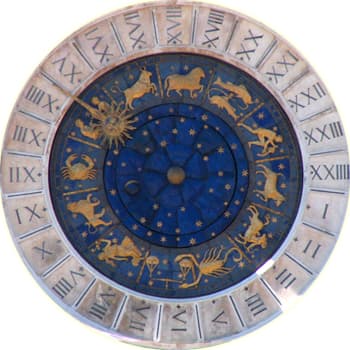
Two Ancient Systems, Two Worldviews
Both Korean Saju and Western astrology attempt to decode the mysteries of human destiny, but they approach this goal from fundamentally different philosophical starting points. Western astrology looks to the sky — the positions of planets, stars, and constellations at the moment of birth. Korean Saju looks to the cyclical nature of time itself, interpreting destiny through the interplay of elemental forces encoded in your birth date and hour.
Understanding these differences doesn't mean choosing one over the other. Many modern seekers find that combining insights from both traditions provides a richer, more complete picture of their life path.
Philosophical Foundations
Western Astrology: The Cosmos as Mirror
Western astrology is rooted in the Hellenistic tradition, which viewed the movements of celestial bodies as reflections of divine order. The core principle is "as above, so below" — what happens in the heavens mirrors what happens on Earth. Your birth chart (natal chart) maps the exact positions of the Sun, Moon, and planets across 12 zodiac signs and 12 houses.
Korean Saju: The Rhythm of Time
Saju draws from the Yin-Yang and Five Elements (Ohaeng) philosophy of ancient East Asia. Rather than looking at celestial positions, Saju treats time itself as carrying inherent qualities. Each moment is a unique combination of elemental energies — Wood, Fire, Earth, Metal, and Water — in their Yin or Yang expressions. Your birth moment captures a specific "fingerprint" of these time-based energies.
What Each System Uses
Western Astrology Requires:
- Exact birth date, time, and location
- Astronomical positions of Sun, Moon, and 8 planets
- 12 zodiac signs (Aries through Pisces)
- 12 houses (areas of life experience)
- Aspects (angular relationships between planets)
Korean Saju Requires:
- Exact birth date and time (location is not needed)
- 10 Heavenly Stems (天干)
- 12 Earthly Branches (地支) — the 12 zodiac animals
- Five Elements interactions (generating and controlling cycles)
- Ten Gods (relational energies based on your Day Master)
One practical difference stands out: Western astrology requires your birth location to calculate the Ascendant and house positions. Saju does not — making it more accessible for people who don't know their exact birthplace.
Classification Systems
Western: 12 Signs, Fixed Categories
Western astrology divides people into 12 sun signs based on birth month. While a full natal chart is far more complex, popular astrology often reduces identity to a single sign: "I'm a Leo" or "She's a Pisces." This creates 12 broad personality archetypes.
Saju: 60 Core Types, Infinite Combinations
Saju's Sexagenary Cycle (60 Gapja) creates 60 unique combinations of Heavenly Stems and Earthly Branches. Since you have four pillars, each with its own combination, the total number of possible birth charts is enormous — over 12 million unique configurations. This granularity allows for highly personalized readings.
How Destiny is Interpreted
Western Astrology: Planetary Influences
In Western astrology, each planet governs specific aspects of life. Mercury rules communication, Venus rules love, Mars rules action, Jupiter rules expansion, and so on. The sign and house position of each planet, plus their angular relationships (aspects), create a complex web of influences that astrologers interpret.
Saju: Elemental Balance
Saju interprets destiny through the balance (or imbalance) of the Five Elements in your chart. Too much Fire might indicate impulsiveness; too little Water might suggest difficulty with emotional depth. The interactions between elements follow specific rules: Water nurtures Wood, Wood feeds Fire, Fire creates Earth, Earth yields Metal, and Metal collects Water. Meanwhile, each element also controls another: Water quenches Fire, Fire melts Metal, Metal cuts Wood, Wood breaks Earth, and Earth dams Water.
This dynamic interplay creates a nuanced picture of strengths, vulnerabilities, and the natural flow of fortune throughout your life.
Time and Prediction
Western: Transits and Progressions
Western astrology tracks future trends through "transits" (current planetary positions relative to your birth chart) and "progressions" (symbolic advancement of the birth chart). Major transits — like Saturn Return (around ages 29 and 58) — mark significant life transitions.
Saju: Daeun and Seun Cycles
Saju uses 10-year Great Luck cycles (대운, Daeun) and annual fortune cycles (세운, Seun) to predict how the elemental environment shifts over time. Each Daeun brings a new elemental influence that interacts with your birth chart, creating periods of opportunity or challenge. This system provides a clear, structured timeline of major life phases.
Compatibility Analysis
Western: Synastry and Composite Charts
Western astrology evaluates romantic compatibility through synastry (overlaying two birth charts) and composite charts (creating a merged chart). Compatible elements, harmonious aspects, and complementary placements indicate strong partnerships.
Saju: Elemental Harmony
Korean Saju evaluates compatibility (궁합, Gunghap) by analyzing how two people's elemental compositions interact. Do they complement each other's weaknesses? Do their Day Masters create harmony or conflict? Saju compatibility readings are so culturally significant in Korea that many couples consult a Saju reader before committing to marriage.
Which System is "Better"?
Neither system is inherently superior — they simply offer different perspectives. Western astrology excels at describing psychological patterns and personality nuances through its rich planetary symbolism. Saju excels at providing structured timelines of fortune cycles and practical guidance for major decisions.
Many modern practitioners appreciate both traditions. If you're already familiar with your Western birth chart, exploring your Saju can reveal entirely new dimensions of self-understanding.
Explore Your Saju Chart
Already know your zodiac sign? Discover what Korean Saju reveals about you. Try our free AI-powered analysis for a fresh perspective on your destiny.
Get Your Free Saju Reading