Introduction to Saju
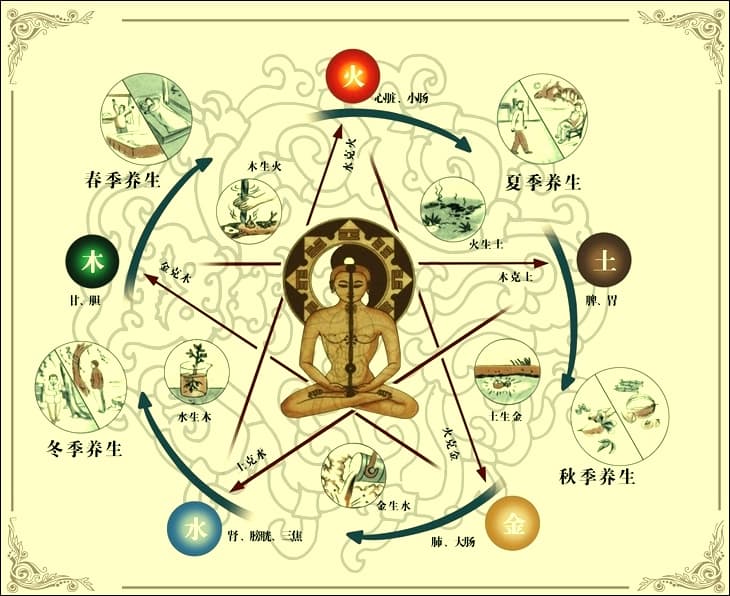
Saju (사주), short for Saju Palja (사주팔자), literally translates to "Four Pillars, Eight Characters." It is one of the most widely practiced forms of fortune-telling in Korea, with roots stretching back over a thousand years. While many Westerners are familiar with astrology based on star signs, Saju offers a completely different lens through which to understand your destiny — one grounded in the ancient Chinese philosophical framework of Yin-Yang and the Five Elements.
In modern Korea, Saju remains deeply influential. People consult Saju readers before major life decisions — choosing a wedding date, naming a child, starting a business, or even evaluating romantic compatibility. Far from being dismissed as superstition, Saju is considered a legitimate form of self-understanding by millions of Koreans across all generations.
The Four Pillars Explained
At the heart of Saju lies the concept of Four Pillars, each derived from the exact moment of your birth: the year, month, day, and hour. Each pillar consists of two characters — a Heavenly Stem (천간, Cheongan) and an Earthly Branch (지지, Jiji) — giving you eight characters in total. This is why the full name is "Four Pillars, Eight Characters."
The Year Pillar
Your year pillar represents your ancestral energy and social persona — how the outside world perceives you. It reflects your family background, social standing, and the broader generational influences that shape your life. In Korean culture, someone's birth year animal (their "tti" or 띠) is the most commonly known element, similar to how Westerners identify with their zodiac sign.
The Month Pillar
The month pillar represents your parents and upbringing. It reveals the environmental influences during your formative years and provides insight into your career tendencies and professional life. The month pillar is determined by the solar terms of the traditional East Asian calendar, not the Western calendar months.
The Day Pillar
Considered the most important pillar, the day pillar represents your core self — your true personality and inner nature. The Heavenly Stem of your day pillar is called your "Day Master" (일간, Ilgan), and it is the central reference point for your entire Saju chart. Your Day Master determines your fundamental character, strengths, and weaknesses.
The Hour Pillar
The hour pillar represents your later years, your children, and your inner aspirations. It reveals hidden desires, creative potential, and what your life may look like in its final chapters. Many Saju practitioners consider the hour pillar to offer the most nuanced and personal insights.
Heavenly Stems and Earthly Branches
The system uses 10 Heavenly Stems and 12 Earthly Branches that cycle together to create a 60-unit cycle called the Sexagenary Cycle (60갑자, 60 Gapja). This 60-year cycle has been used throughout East Asia for millennia to track time and calculate destinies.
The 10 Heavenly Stems
Each Heavenly Stem is associated with one of the Five Elements (Wood, Fire, Earth, Metal, Water) in either its Yin or Yang form:
- Gap (갑) & Eul (을) — Wood (Yang & Yin)
- Byeong (병) & Jeong (정) — Fire (Yang & Yin)
- Mu (무) & Gi (기) — Earth (Yang & Yin)
- Gyeong (경) & Sin (신) — Metal (Yang & Yin)
- Im (임) & Gye (계) — Water (Yang & Yin)
The 12 Earthly Branches
The 12 Earthly Branches correspond to the 12 zodiac animals familiar to many Westerners through Chinese astrology: Rat, Ox, Tiger, Rabbit, Dragon, Snake, Horse, Goat, Monkey, Rooster, Dog, and Pig. Each branch also carries its own elemental and directional associations.
The Ten Gods (Sipseong)
One of the most distinctive features of Saju analysis is the system of Ten Gods (십성, Sipseong). These are relational energies calculated based on how each element in your chart interacts with your Day Master. The Ten Gods reveal your relationships, career potential, wealth prospects, and personal challenges.
The Ten Gods include roles like the Direct Officer (representing authority and discipline), the Indirect Wealth (representing unexpected financial gains), and the Eating God (representing creativity and expression). Understanding your dominant Ten Gods provides a remarkably detailed portrait of your life tendencies.
Daeun: The Great Luck Cycles
Beyond the static birth chart, Saju practitioners analyze Daeun (대운) — 10-year fortune cycles that shift the elemental balance of your chart over time. Your Daeun cycles explain why certain decades of your life feel dramatically different from others.
Combined with Seun (세운), the annual fortune influenced by each passing year, Saju provides a dynamic, evolving picture of your destiny — not a fixed prediction, but a flowing landscape of opportunities and challenges.
How Saju Differs from Western Astrology
While Western astrology focuses on the positions of celestial bodies (planets, stars, and constellations) at the time of birth, Saju is based entirely on the cyclical interplay of time-based elements. There are no planetary charts or star maps in Saju — only the mathematical relationships between the Five Elements as expressed through the Heavenly Stems and Earthly Branches.
This makes Saju both more systematic and more grounded in Eastern philosophy. Where Western astrology might describe you as "a Scorpio with Aquarius rising," Saju would describe you through the balance of elemental forces in your chart — perhaps as a Yin Water Day Master with strong Fire influence, suggesting someone with deep intuition but an outwardly passionate nature.
Saju in Modern Korea
Today, Saju has merged with modern technology. AI-powered Saju analysis services can calculate your full chart and provide detailed interpretations in seconds — something that traditionally required a lengthy consultation with an experienced practitioner. These digital tools make Saju accessible to anyone, regardless of language or cultural background.
Whether you're seeking career guidance, relationship insight, or simply a deeper understanding of your personality, Saju offers a rich, time-tested framework that complements (rather than competes with) Western astrological traditions.
Discover Your Saju
Curious about what the Four Pillars reveal about your destiny? Try our free AI-powered Saju analysis and explore the ancient wisdom of Korean astrology.
Get Your Free Saju Reading