What people say afterward
Honest words from people who have had a reading
Loading reviews…
Why tarot is a tool for
grounded self-reflection
Tarot is not fortune-telling. It is what Carl Jung, a giant of modern psychology, called the language of the unconscious — a system of symbols.
1933 LECTURE RECORDS
When Jung met the tarot
In 1933, Carl Jung — the founder of analytical psychology — described tarot as a tool of psychological projection. This went well past curiosity: he treated the card images as a professional method for bringing unconscious material into awareness.
Jung suggested using tarot deliberately during periods of psychological strain. It was the moment tarot was recognised as a practical instrument that could sit inside clinical work.
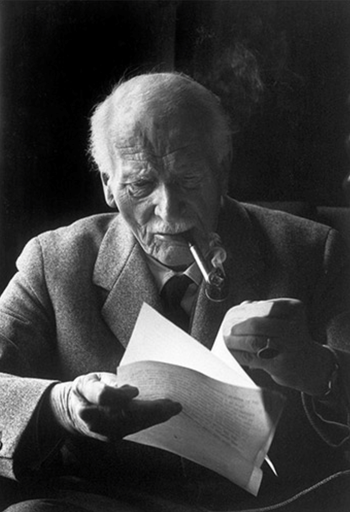
ANALYTICAL PSYCHOLOGIST
Carl Gustav Jung
“The tarot cards are a method of reading the conditions of the present moment. Not magic and not prophecy — the unconscious playing with its own contents.”
CARL GUSTAV JUNG, 1933
Meaningful coincidenceSynchronicity
Jung called a meaningful coincidence synchronicity. The instant you draw a card, the symbolic link between your state of mind and the image in front of you is exactly that.
The collective unconscious and archetypes
Archetype
The 22 Major Arcana trace a journey every human culture recognises. That is why the resonance lands immediately, across eras and languages.
Psychological projection
Projection
The same principle as the Rorschach test. You project unspoken feeling onto 78 images, and they become a mirror that lets you look at your own problem from the outside.
Intuition and logic, integrated
Integration
Accumulated experience and knowledge, synthesised in a single moment. This puts words to the sense you can feel clearly but struggle to explain.
Tarot does not predict the future. It brings you face to face with the answer you already knew and kept avoiding.
The psychology behind that uncanny accuracy
A randomly drawn card matching your situation is not luck. It is a phenomenon psychology can explain.
Selective attention
When something weighs on you, your brain tunes toward anything related to it. Out of many symbols, the ones connected to your situation stand out with unusual clarity.
Surfacing the unconscious
Needs you rarely notice rise into awareness through the card image. That feeling of “this is exactly right” is the moment you recognise yourself.
Resonance of shared experience
Love, loss, risk — archetypal symbols hold experiences common to everyone, so they reach across culture and time.
The real value of tarot is not a prediction that came true. It is the depth of self-understanding you walk away with.
If any of this sounds like you
Tarot will give you a clear direction
Love & relationships
Getting back together, mixed signals, where this is heading
Career & work
Changing jobs, promotion, the timing of a new move
People around you
Conflict, how to say it, repairing a relationship
A decision you are stuck on
Standing between A and B
Money & investment
Business, investing, which way to go with money
Personal growth
Getting unstuck, starting something new
How the reading works
A short conversation with the AI makes the interpretation far sharper
Choose a spread
Pick the spread that fits the shape of your question
One Card (a core message), Three Card (the flow), Celtic Cross (the full picture)
Talk with the AI first
Before any card is drawn, you exchange three to seven messages
A good question makes a good answer. The conversation sharpens the real question.
Draw the cards
Choose your cards with a settled mind
The cards that answer your refined question are laid out
Deep interpretation
A reading written around your conversation
A detailed written analysis shaped to your situation
Practical guidance
Concrete next steps
Beyond interpretation — a direction you can actually act on
The quality of the question
sets the quality of the answer
Simply asking whether a job change will work out is fortune-telling. The conversation with the AI is where your worry gets rebuilt in psychological terms.
“Should I quit?” becomes “What do I have to face in order to get out of this standstill?” — and only then do the cards show something concrete enough to change what you do next.
Professional readers insist on reframing the question. The AI does it more consistently, and without bias.
AI Question Refinement
Does he like me?
“What should I be paying attention to in this relationship?”
Will I get the promotion?
“What do I need to prepare in order to be promoted?”
Why did this happen to me?
“What can I learn and grow from in this experience?”
Turn a closed question into a growth question, and the message of the cards arrives far more concretely.
Three spreads to choose from
A full 78-card deck, read properly
One Card
1 cardA core message, advice for today
The simplest spread, and still a forceful one. When a single card out of 78 carries the message, it tends to land more directly. For when you want the point and nothing else.
Best for: A quick decision, the direction of your day, “what do I need to hear right now?”
Three Card
3 cardsThe flow and context of your situation
Three perspectives that give the situation depth. Choose the layout that matches the shape of your question.
Available layouts:
Best for: Love, relationships, a fork in the road, “where is this going?”
Celtic Cross
The standard of tarot, unchanged since 1910
A full 360° read of your situation
The most authoritative spread, systematised by Arthur Waite. Past influence, present challenge, future potential, conscious and unconscious, outside forces — every side of the situation laid out across ten cards.
What the ten cards show
Best for: A major life decision, a complicated relationship, a career change, “I want to see all of it at once”
CELTIC CROSS SPREAD
Why the Celtic Cross has lasted
for more than a century
Ten cards that build a map of your inner landscape
Reading the situation and yourself at once
The Celtic Cross separates the outside situation (cards 1–6) from how you meet it (cards 7–10). Seeing what the problem is and how you are responding side by side is what makes the way out visible.
Past, present, future — and the unconscious underneath
It goes past simple prediction: past influence, the heart of the present, and potential futures, in order. It also holds up a mirror to wounds and feelings you had not registered.
What card 9 shows: hopes and fears
The most revealing position of all. It shows that your hope may be the very same thing as your fear. The moment you see that paradox, you understand why you have not been able to decide.
Cross-reading for depth
Goal against outcome
The gap between the outcome you want and the one you are actually heading toward.
Your approach against your environment
Whether your effort and your surroundings line up, and which part is genuinely within your control.
There is a reason all ten are read together. The more tangled the question, the more angles you need at once.
WHY AI TAROT
The objectivity a human reader
cannot quite reach
A reading with no emotion and no bias reflects your unconscious most clearly.
Analysis with no cold reading
In person, a reader picks up cues from your face and tone, and bias creeps in. The AI compares only your written words against the symbolic system of the cards, and reads what sits under the story you tell yourself — with no noise in between.
A conversation with no clock running
None of the time pressure of a face-to-face session. It moves at your pace, so you can think, sort your thoughts, and say the thing you actually came to say.
Listening without judgment
Things that are hard to say to a person can be said here without any fear of being judged. Honesty produces a more accurate reading.
Consistent, knowledge-backed expertise
No off days. All 78 cards, their symbols and their combinations, analysed consistently against a verified system.
A hybrid method that raises the quality of the question
The AI refines a vague worry into a precise question first, because the depth of the question decides the accuracy of the reading. It is the core process professionals recommend, carried out in full.
AI does not replace the atmosphere of tarot. It concentrates on the accuracy of the interpretation.
OUR PHILOSOPHY
Not surrendering to fate — choosing it
Self-Empowerment Philosophy
The point of a tarot reading is to help you find the answer that is already inside you. A reader is a guide, not the one who decides your fate.
So instead of “this will happen to you”, we write “there is a possibility of…”, “it may be worth exploring…” — an open reading.
The future is not fixed. You always have the freedom to choose. A card is guidance, never an order, and the decision is always yours.
“The answer is already in you. The cards only remind you of it.”
Saju or tarot — which one, and when?
Knowing what each is good at gets you a better answer
Saju
- ·Innate temperament and potential
- ·The larger flow, in ten-year and yearly cycles
- ·Compatibility, aptitude, the direction of a life
Best for: “How is this year going to go?”, “What kind of work suits me?”
Tarot
- ·Focused on your present situation and state of mind
- ·An immediate answer to what is right in front of you
- ·Concrete guidance you can act on
Best for: “What is he actually thinking?”, “Should I take the job?”
If you have a specific decision that needs making now, tarot is the better fit.
Frequently asked questions
Start your tarot reading
Choose a spread, then tell us briefly where you are
The more specific you are, the more accurate the reading
Celtic Cross (10 cards)
$9.99
You talk with the AI first, then draw your cards. Keep the link to your result page — you can come back to it at any time.
More precise, more in depth.
The premium readings at SajuWiki
Saju × Zi Wei Dou Shu, cross-read Your life through 12 palaces and 100+ stars
Reads your Saju chart and your Zi Wei Dou Shu chart against each other, palace by palace, across wealth, career, love, health, family and study — down to what each individual star means for you.
The stars of your 12 palaces, turned on the one thing weighing on you
Answers a single worry from your Zi Wei Dou Shu chart — the major and support stars in the palaces that govern it, the Four Transformations, and how your Major Limits are moving.
That worry you're carrying — your Saju has an answer
A precision Four Pillars report built around one specific worry, rather than a general life reading. Written for the question you actually came with.
Will they come back? The chart already knows
Reunion probability from both charts, the golden window to reach out, the approach that fits their temperament — and if it's time to let go, how to actually move on.
Are we meant to be?
Both charts read together — your compatibility score, where you clash and why, whether this leads to marriage, and the decisive moments of the next 3 years.
Find out what your Saju chart actually says
Your Four Pillars, Five Elements and Ten Gods, calculated from your birth date and time. Start with the free reading.