What Gunghap Actually Means
If you have watched enough Korean dramas, you have probably seen the scene: a mother quietly writes down the birth date and hour of her child's partner, takes the paper to a fortune teller, and waits for a verdict on the marriage. That ritual has a name — Gunghap (궁합), the Korean art of comparing two people's destinies to see how their lives fit together.
The word itself is worth unpacking. Gung (궁) means "palace" — in Saju, each position in a chart is a palace that governs a domain of life. Hap (합) means "union" or "harmony." Gunghap is literally the question of whether two sets of palaces harmonize. It is not a percentage pulled out of the air. It is a structured comparison of two Saju charts, each built from the year, month, day, and hour of birth.
For most of Korean history, Gunghap was consulted before a marriage was agreed to, and the people consulting it were the parents, not the couple. A bad reading could stop an engagement. That version of the custom has faded — arranged marriage largely disappeared, and young Koreans choose their own partners. But the practice did not disappear with it. It changed hands. Today the person checking Gunghap is usually the person in the relationship, checking it out of curiosity somewhere between the third date and the engagement ring.
Gunghap in Korean Dating Today
Ask a Korean in their twenties whether they believe in Gunghap and you will often get a carefully hedged answer: not exactly, but they have checked it. Saju cafés cluster around university districts in Seoul. Compatibility readings are a normal second-date activity, the way a couple elsewhere might do a personality quiz together. The tone is playful, but the questions people bring are real ones — why do we keep arguing about the same thing, why does this feel so intense so fast, is this the right year to move in together.
The parental version has not vanished either. Before a formal engagement, it is still common for one or both families to have a reading done — and increasingly, the couple checks it themselves first.
What makes Gunghap different from most Western compatibility tools is that it does not ask you anything. There is no questionnaire, no self-report, no chance to describe yourself the way you wish you were. It works from two birth moments and nothing else. For a lot of people, that is exactly the appeal.
How Gunghap Is Actually Calculated
Under the romance, Gunghap is a technical procedure. A reader builds both charts — eight characters each, four Heavenly Stems and four Earthly Branches — and then examines how those sixteen characters interact. Four layers of analysis do most of the work.
1. Day Master Harmony
The Day Master (일간, Ilgan) is the Heavenly Stem of your day pillar, and it represents you — your core self, stripped of circumstance. In a compatibility reading, the relationship between the two Day Masters is the first thing examined, because it describes the instinctive dynamic between the two people before any effort or intention enters the picture.
The Five Elements interact in predictable ways. One element generates another (Water feeds Wood, Wood feeds Fire), one element controls another (Water puts out Fire, Metal cuts Wood), and two of the same element reinforce each other. A generating relationship between Day Masters tends to feel supportive — one partner naturally nourishes the other's energy. A controlling relationship tends to feel charged: attraction with an edge, and often a persistent power dynamic. Two identical Day Masters produce the eerie ease of dating someone who thinks exactly like you, along with the blind spots you both share.
None of these is automatically good or bad. A generating pair can drift into a caretaker dynamic. A controlling pair can produce the sharpest, most alive relationship either person ever has — provided they know what they are handling.
2. Five-Element Complementarity
Every Saju chart is unbalanced in some way. One element dominates; another is thin or missing entirely. That imbalance shows up as personality — someone with very little Water may struggle to slow down and reflect; someone drowning in Water may deliberate forever and never act.
This is where Gunghap gets genuinely interesting. The reader asks a simple question: does one partner supply the element the other lacks? When the answer is yes, the pairing tends to feel stabilizing in a way people describe as "I'm calmer around them" or "I get things done when they're here." The missing piece has arrived from outside.
The reverse also happens. If both charts are heavy in the same element and both are starving for the same missing one, the relationship can amplify a shared weakness. Two Fire-dominant charts might create a partnership that burns beautifully and exhausts both people within two years. Recognizing this early is one of the most practical things a Gunghap reading offers. You can read more about elemental logic in our guide to the Five Elements.
3. Hap and Chung — Harmony and Clash
The twelve Earthly Branches form fixed relationships with each other, and these are the sharpest tool in the compatibility kit.
- Six Harmonies (육합, Yukhap) — six specific pairs of branches that combine favorably. When one partner's branch harmonizes with the other's, that area of life tends to run smoothly between them.
- Three Harmonies (삼합, Samhap) — sets of three branches that form a strong elemental alliance. Even a partial match between two charts is treated as a favorable bond, often described as the pattern behind couples who become a genuine team.
- Chung (충) — a clash between directly opposing branches. The classic example is Rat and Horse (자오충, Jaochung), branches that sit opposite each other and pull in incompatible directions.
Chung is the one that alarms people, and it deserves a careful explanation. A clash does not mean the relationship fails. It means friction is structurally present in whichever domain the clashing branches govern. A clash in the day branches shows up in daily domestic life; a clash involving the year branches often shows up as friction with families or social circles. Clash energy is also, notably, magnetic. Many intense attractions have a Chung sitting underneath them.
4. The Spouse Palace
Each pillar governs a domain, and the day branch (일지) is the spouse palace (배우자궁) — the seat of your marriage and partnership life. In individual readings it describes the kind of partner you tend to attract and how you behave inside a committed relationship.
In Gunghap, the two spouse palaces are compared directly. A harmony relationship between them is one of the most favorable indicators in the entire system — it suggests two people who are comfortable in each other's daily presence, which matters far more over decades than dramatic chemistry does. A clash between spouse palaces points to recurring domestic friction: not doom, but a pattern the couple will meet again and again until they name it.
This is also why exact birth time matters. Without it, the hour pillar — intimacy, private life, the long final chapter of a partnership — stays out of reach. You can generate your own chart first with our free Saju reading to see what your day branch holds before comparing it with anyone.
Compare Two Charts
Curious how your chart and your partner's actually interact? Our two-person compatibility report analyzes both Saju charts in full — Day Masters, elemental balance, Hap and Chung, spouse palaces, and relationship timing.
Get Your Gunghap ReportWhat a Modern Gunghap Reading Covers
A traditional reading produced a verdict: suitable or unsuitable. A modern one is closer to a relationship map, and it usually addresses four areas.
Attraction
Why you were drawn to each other, and whether the pull is the supportive kind or the charged kind. This section often explains the thing couples find hardest to articulate — the sense that this person feels different from everyone before them.
Communication Style
How each Day Master processes information and conflict. A Yang Fire partner tends to say the thing immediately and loudly and be finished with it; a Yin Water partner withdraws, thinks, and returns days later. Neither is wrong, and each experiences the other as an insult until somebody explains the difference.
Conflict Patterns
The most useful part of any Gunghap reading. Clash and control relationships predict the shape of your recurring arguments — whether they are about autonomy, money, family obligation, or attention. Couples frequently report that the described pattern is the exact fight they have been having for years without ever naming it.
Timing
Saju is not static. Daeun (대운), the ten-year luck cycles, and Seun (세운), the annual influence, shift the elemental balance of both charts over time. A couple can be in an easy stretch or a strained one, and Gunghap can identify which years are structurally supportive of commitment, cohabitation, or marriage. This timing layer is also central to questions about whether a past relationship might return.
Why Zodiac-Animal Compatibility Is the Shallow Version
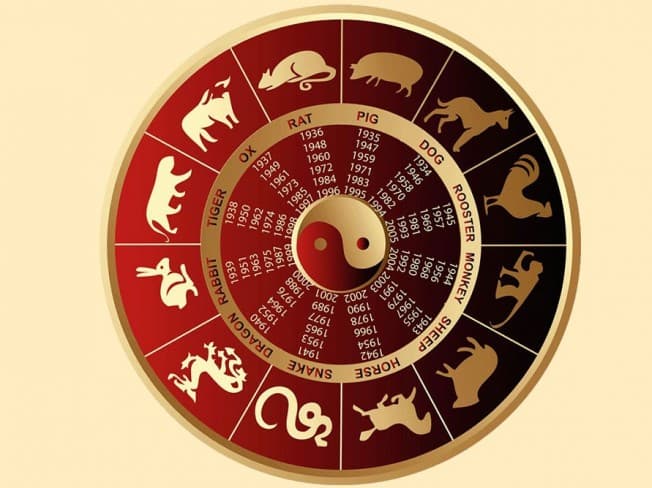
Search "Korean compatibility test" and most of what surfaces is tti gunghap (띠 궁합) — zodiac animal matching. Dragon and Rat are good, Horse and Rat are bad, and so on down a list you can memorize in an afternoon.
Here is the problem, stated plainly. Your zodiac animal is the Earthly Branch of your year pillar. That is one character out of eight. Animal-only compatibility is reading one-eighth of one chart against one-eighth of another and calling it an answer. It also means everyone born in the same year receives an identical result — roughly seventy million people worldwide sharing your romantic fate.
Worse, the year pillar is the layer of the chart least connected to intimate life. It speaks to ancestry, social persona, and how the outside world reads you. The spouse palace — the position that actually governs partnership — sits in the day pillar and is invisible to animal matching entirely.
Full four-pillar Gunghap compares sixteen characters and their interactions. Animal matching is a fun icebreaker. It is not a compatibility analysis, and the gap between the two is not small.
Can Bad Gunghap Be Overcome?
This is the question people actually want answered, usually after reading something unsettling. The honest answer, and the one most contemporary Korean practitioners give, is yes.
Gunghap is a map, not a verdict. It describes terrain — where the ground is level, where it rises steeply, where the weather turns. A map that shows a mountain is not telling you the journey is impossible. It is telling you where to bring different equipment.
Consider what a difficult reading actually says. A Chung between spouse palaces means friction in shared daily life. That is not a prophecy of divorce; it is a warning that living together will require more deliberate structure than it does for other couples — separate space, explicit routines, agreed rules for how disagreements end. Couples who know this in advance build those structures. Couples who do not spend years wondering why something so ordinary is so hard.
Two things are worth holding onto. Almost every pairing contains both harmony and clash across different pillars, so a reading that reports only bad news is an incomplete one. And timing changes everything — plenty of relationships that felt impossible in one Daeun cycle settled completely in the next.
The couples who get the most from Gunghap are not looking for permission. They take the friction points seriously and treat them as information. If you are curious about how Saju compatibility applies outside of romance — to business partners, siblings, or colleagues — we cover that in Saju compatibility beyond romance.
Frequently Asked Questions
What is Gunghap in Korean culture?
Gunghap (궁합) is the Korean practice of comparing two people's Saju charts to assess romantic compatibility. Traditionally it was consulted before an engagement, usually by the parents. Today it is more often checked by the couple themselves, as a way of understanding attraction, communication style, and likely sources of friction.
Is zodiac animal compatibility the same as Gunghap?
No. Zodiac animal matching uses only the Earthly Branch of the birth year — one of eight characters. Real Gunghap compares all four pillars of both people, including the Day Master, five-element balance, spouse palace, and the harmony and clash relationships between branches.
Do I need my exact birth time?
A useful reading is possible without it, but the birth time unlocks the hour pillar, which governs intimacy, private life, and the later chapters of a partnership. Without it, the Day Master, elemental balance, and spouse palace still carry the core of the analysis.
Can a couple with bad Gunghap still succeed?
Yes. Gunghap describes tendencies, not outcomes. A clash predicts where friction will appear and how it will feel, not whether the relationship ends. Many long Korean marriages sit on charts a traditional reader would have called difficult — those couples simply learned to manage what the chart pointed to.
Do Koreans still check Gunghap before marriage?
Many do. The custom has softened from a parental veto into a personal curiosity, but Gunghap consultations remain common before engagements, and compatibility services are widely used by Koreans in their twenties and thirties who are simply dating.
See Your Gunghap
Enter both birth dates and receive a complete Korean compatibility analysis — Day Master dynamics, elemental balance, harmony and clash patterns, spouse palace comparison, and the years ahead for your relationship.
Start Your Compatibility Reading